
Low pressure
aluminum casting.
Controlled filling.
A considered approach to your component.
Explore the process principle and the engineering questions that shape a custom aluminum casting project with BLESS.
Discuss a low pressure project
A controlled rise.
A carefully considered fill.
Low pressure casting uses applied gas pressure to move molten aluminum from a reservoir through a feed tube into a mold cavity. The filling and feeding cycle is part of the process design.
Illustrative process principle. Not a BLESS machine, mold design or engineering model.
Process reference: Kurtz Ersa — low pressure casting . The schematic is simplified; project tooling and settings require separate review.
The answer starts
with the drawing.
Process selection requires more than a part photograph. These are the inputs to discuss when evaluating a low pressure casting project.
| Consideration | What to discuss | What to provide |
|---|---|---|
| 01 Part geometry | Wall transitions, internal features, openings and access for subsequent operations. | Current drawing revision and relevant section views. |
| 02 Material & service | Required material specification and the conditions the component must withstand. | Specified alloy or standard, operating environment and critical requirements. |
| 03 Functional surfaces | Which interfaces need machining and which can remain as cast. | Datums, critical dimensions, threads and surface requirements. |
| 04 Verification | How the part will be accepted and which records are required. | Inspection criteria, drawing notes and any required test specification. |
| 05 Production needs | Project stage, order quantities and the intended supply pattern. | Sample needs, estimated volume and requested timing for discussion. |
Tooling, alloy suitability, achievable tolerances and timing are confirmed for the individual project.
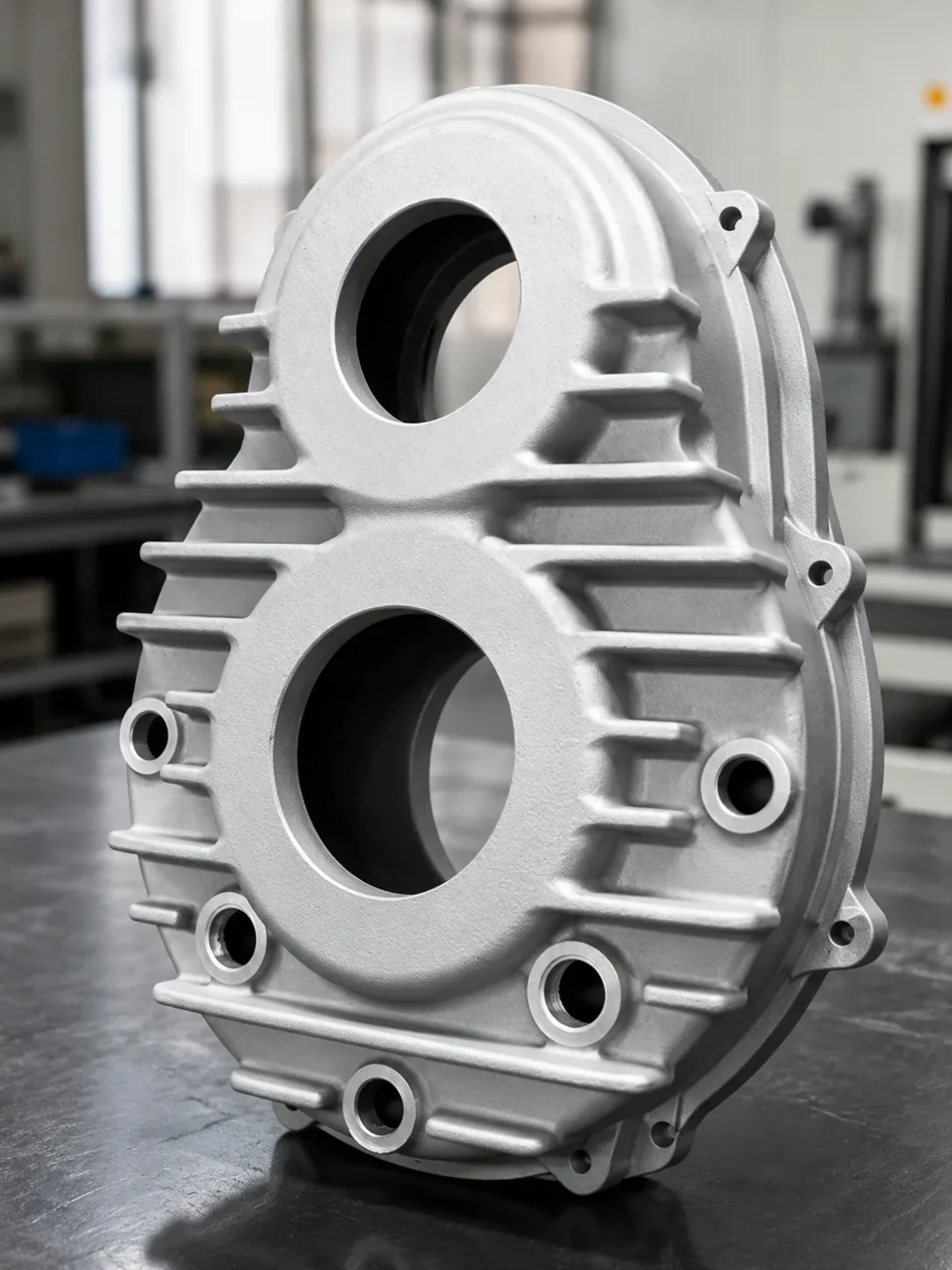
Product reference photograph.
Casting route is not established by the image.
The details
that make it fit.
Think about machining and verification alongside the casting requirements. A component drawing should distinguish the surfaces that establish fit from those that serve another purpose.
Identify machined features
Mark bearing seats, mating faces, bores and threads where machining is required by your drawing.
Define your acceptance criteria
State critical dimensions, geometric requirements and surface expectations. Avoid relying on a general description such as “high precision.”
Discuss inspection scope
Request the checks and records your application needs. The available inspection method and scope must be agreed for your project.
Low pressure
or gravity?
The filling approach is one part of the decision. Geometry, tooling, material and verification requirements need to be considered together.
See the manufacturing routesApplied pressure drives the metal into the mold cavity.
Gravity provides the driving force for mold filling.
Neither route guarantees a specific quality level by itself. Evaluate the complete manufacturing and verification plan.
A clearer brief.
A better conversation.
Use this checklist to organize your project information. Include what is available and flag anything that still needs discussion.
-
01
Part information
Drawing reference, revision, application and any assembly context.
-
02
Technical requirements
Specified material, critical features, machining, finish and acceptance criteria.
-
03
Project information
Estimated quantity, project stage, sample needs and requested timing.
-
04
Open questions
List the decisions that need discussion before a manufacturing route can be agreed.
Low pressure casting
procurement FAQ.
Start here, then bring the specifics of your component to the discussion.
What is low pressure aluminum casting? +
Low pressure aluminum casting uses applied gas pressure to move molten aluminum from a reservoir through a feed tube into a mold cavity. The filling and feeding cycle is part of the process design. Actual tooling and operating settings are determined for the project.
Does the process name confirm that BLESS uses a permanent metal mold? +
No. This page does not establish the mold construction used for your project. Ask BLESS to confirm the tooling approach and scope before treating low pressure die casting or permanent mold casting as a confirmed capability.
How should I decide between low pressure and gravity aluminum casting? +
Review the part geometry, required material, quantity, tooling approach and acceptance criteria. Low pressure and gravity describe different filling approaches; neither process name guarantees a particular quality level. The complete casting, machining and inspection plan should be evaluated together.
Review the BLESS manufacturing routesCan you quote low pressure casting from a photograph alone? +
A photograph can help explain the general component form, but it does not define dimensions, material, internal geometry or inspection requirements. Provide a current drawing, relevant sections, estimated quantity and the intended application for a useful technical and commercial discussion.
Which dimensions and surfaces should I identify for machining? +
Identify the datums, mating faces, bores, threads and other interfaces controlled by the drawing. Distinguish as-cast requirements from machined features, and include the tolerances and surface requirements that affect fit or acceptance.
Prepare the engineering requirementsWhich alloys, tolerances and part sizes are available? +
These require project-specific confirmation. Send the material standard, overall dimensions, drawing tolerances and any critical requirements. This website does not publish a verified alloy list, maximum part size or universal tolerance capability.
What quality records should I request with a low pressure casting inquiry? +
State the records required by your application, such as dimensional results or specified material verification. Identify the features to be checked, the acceptance criteria and any applicable test procedure. The method, sampling scope and available records must be agreed for the project.
Is there a fixed minimum order or lead time? +
No verified universal minimum order or lead time is published here. Provide prototype or sample needs, initial and repeat order quantities, the project stage and your requested timing. Tooling, sampling and delivery commitments require review and written confirmation.
Discuss quantity and timing with BLESS
Put your drawing
in the hands of a manufacturer
Tell us the application, material, dimensions, expected volume and delivery target. If you are unsure about the process, simply send the drawing — we can help evaluate it.
Taicang, Suzhou, Jiangsu, China
Gaoyou, Yangzhou, Jiangsu, China
Request a Quote
RFQTell us about the part and our team will review the project.
Local test · email sending is simulated by default.